Position Paper: Understanding Transnational Repression (TNR) in Germany Through Three Lenses: The Repressive State, the Host State, and the Targeted Individual
Introduction
Many activists, journalists, and human rights defenders who fled repression in their home countries continue to face threats in Germany that follow them across borders. These threats are not isolated incidents, nor can they be explained solely by past experiences of trauma or persecution; they are part of a broader and increasingly documented pattern known as transnational repression (TNR), by which authoritarian governments seek to silence, intimidate, or control individuals and communities living outside their territory. While TNR is a global phenomenon affecting democratic host states worldwide, this paper focuses on Germany and examines how these cross-border practices impact individuals living under German jurisdiction.
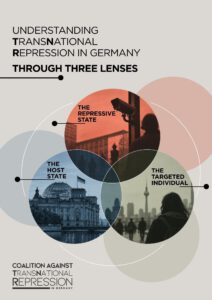
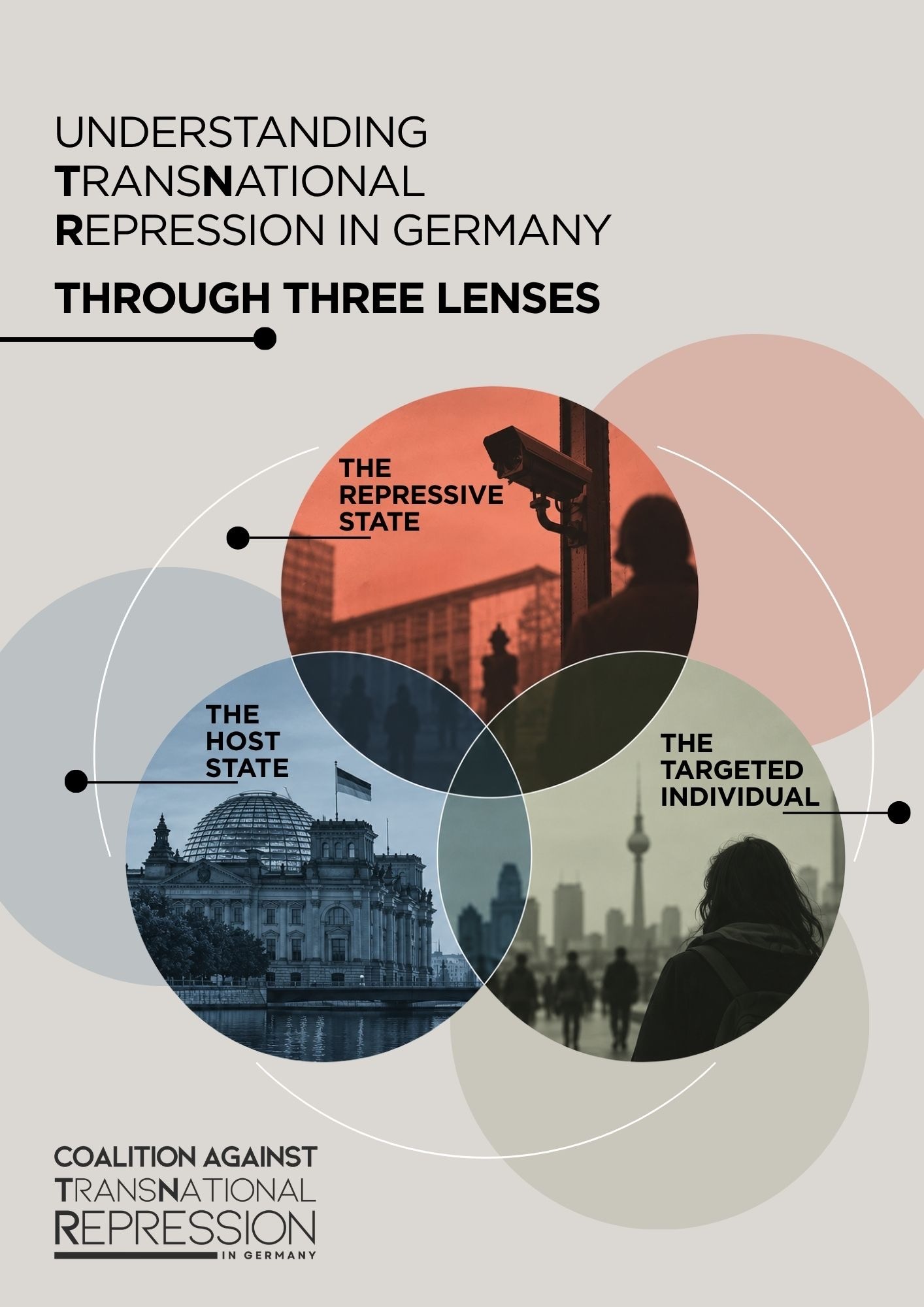
Understanding TNR requires examining it through three distinct but interconnected lenses: the repressive state, the host state, and the targeted individual. Each lens captures a different dimension of how TNR operates, how it is experienced, and how it can be addressed in practice. This paper adopts a human rights approach, placing targeted individuals, rather than states or geopolitical dynamics, at the centre of analysis.
The purpose of this paper is threefold: to provide conceptual clarity, to guide policy responses, and to contribute to strengthening protection mechanisms in Germany. By distinguishing between the roles of perpetrators, host state institutions, and targeted individuals, this paper seeks to reframe TNR as a human rights issue rather than treating it primarily through the prism of foreign interference or national security. This paper argues that the latter framing on its own may obscure the lived harms experienced by targeted individuals, as well as the risks leaving them insufficiently protected.
Beyond analysis, this paper seeks to contribute to the ongoing discussion on how TNR should be understood, defined, and addressed. As awareness of TNR continues to grow in Germany and internationally, different policy and institutional frameworks emphasise different aspects of the phenomenon, including foreign interference, national security, state sovereignty, and human rights protection. By putting the experiences and rights of targeted individuals in the foreground, this paper aims to complement existing approaches and contribute to the development of more comprehensive, rights-based, and effective protection responses.
A human rights-based approach makes visible the full range of harms caused by TNR. Beyond discrete acts of threat or intimidation, TNR often results in cumulative psychological, social, and economic consequences. Continuous surveillance, threats against family members, and persistent digital harassment can generate chronic stress, anxiety, isolation, and a sustained sense of insecurity. These harms frequently disrupt employment, education, civic participation, and integration processes in Germany, significantly constraining targeted individuals’ ability to rebuild stable and secure lives.
These impacts are not incidental. They systematically undermine Germany’s commitments to integration, democratic participation, and the protection of fundamental rights. When individuals live under constant threat from foreign states while residing in Germany, the promise of safety in exile becomes conditional and fragile rather than durable.
At the same time, much of this conduct unfolds below established criminal thresholds, making it difficult for institutions to recognise and address TNR at an early stage. As a result, many incidents go unrecognised, are not systematically documented, or are not recorded as cases of TNR by the relevant authorities. In parallel, some targeted individuals fear retaliation against family members. Others face language or legal barriers; or distrust authorities due to past experiences in authoritarian contexts; or are concerned by institutional proximity to perpetrator states. These factors contribute to the under-reporting of incidents. Together, gaps in institutional recognition and documentation, combined with the under-reporting of incidents by affected individuals, widen existing protection gaps and allow TNR to persist with limited visibility.
This dynamic produces a systematic protection gap: harms are real and ongoing, yet institutions often lack the categories, procedures, or mandates to respond before serious escalation occurs. A human rights lens is therefore essential to shift responses from reactive enforcement toward preventive protection.
By applying a human rights approach, this paper highlights the limitations of incident‑based and security‑focused understandings of TNR. Such an approach draws attention to the structural conditions that enable TNR to operate across borders and shape the experiences of targeted individuals.
Examining TNR through these three lenses – repressive state, host state, and targeted individual – is not merely an analytical exercise. It is a diagnostic and policy‑relevant framework that helps identify where responsibility lies, where institutional responses fall short, and where protection obligations must be strengthened to ensure that people living under Germany’s jurisdiction can exercise their rights without fear.
The following sections deconstruct these dynamics by analysing the strategies of repressive states, the institutional gaps of host states, and the lived experiences of targeted individuals. In doing so, the paper highlights both the limitations of existing approaches and the added value of a human rights-based perspective on TNR.
1. Repressive States: Exporters of Transnational Repression
Repressive states are the original source of TNR. Autocratic governments do not merely silence dissent at home; they actively extend their systems of persecution and control across borders. In doing so, they extend human rights violations committed at home beyond their borders. Their intention is straightforward: to ensure that criticism, evidence of abuse, calls for accountability, and meaningful political participation cannot survive even in exile.
How Do They Describe Targeted Individuals?
Repressive governments rarely admit that they target peaceful critics. Instead, they use labels designed to delegitimise and criminalise them. Common terms include:
- terrorists
- extremists
- separatists
- traitors
- foreign agents
- criminals evading justice
- threats to national security
The purpose is not accuracy, but justification. Through such labeling, states create false narratives that portray political persecution as legitimate “law enforcement.”
How Do They Exercise Transnational Repression?
TNR operates through a wide and evolving set of methods that often overlap and reinforce one another. Authoritarian governments frequently deploy multiple tactics simultaneously, adapting them to exploit legal, institutional, and jurisdictional gaps across borders. These practices include:
- Direct threats and surveillance abroad, including monitoring of exiled individuals’ movements and activities outside the country of origin.
- Harassment or punishment of family members or associates who remain in the country of origin, as a form of coercion-by-proxy.
- Digital intrusions and online repression, such as hacking, spyware, data leaks, and doxxing.
- Misuse of legal and administrative mechanisms, including fabricated criminal cases, prosecutions in absentia, the abuse of INTERPOL notices, and the misuse of mutual legal assistance requests as well as other forms of international judicial cooperation.
- Refusal to issue or renew passports and other official documents, arbitrary denial of consular services, and conditioning access to documentation on coercive “quid pro quo” demands.
- Interference in asylum and protection procedures, including the use of state‑directed or influenced interpreters to obstruct or manipulate asylum claims.
- Pressure exerted through embassies and consular channels, as well as through government‑organised non‑governmental organisations (GONGOs) and community institutions, including places of worship.
- Infiltration and sabotage of diaspora opposition groups, including surveillance, disruption of organising, and intimidation of activists abroad.
- State‑sponsored public events in host countries, designed to demonstrate reach, presence, and power within diaspora communities.
- Smear campaigns conducted through state‑controlled media and social media platforms, often portraying critics as criminals, extremists, or security threats.
- Severe acts of transnational violence, including kidnapping, forced rendition, and death threats in extreme cases.
These acts are designed to make people feel unsafe even in host countries where they should be able to exercise their rights freely and without fear.
How Do Repressive States Exploit Structural Vulnerabilities?
Repressive states systematically exploit structural vulnerabilities to extend repression beyond their borders. Rather than relying solely on overt force, they leverage legal, social, and procedural weaknesses affecting individuals in exile to maintain control while minimising visibility, attribution, and political cost.
- Authoritarian socialisation and risk perception: Individuals targeted by TNR often come from contexts where surveillance, intimidation, and punishment were normalised state practices. These experiences shape long-term perceptions of risk, undermine trust in institutions, and discourage engagement with authorities, even in democratic host states. Repressive actors exploit this conditioned fear to suppress reporting and facilitate continued intimidation from afar.
- Legal and administrative precarity: Unstable asylum status, temporary residence permits, dependency on documentation, and prolonged administrative procedures create leverage points for repression. Authoritarian states exploit these vulnerabilities by transmitting false allegations, obstructing documentation processes, or triggering administrative scrutiny, thereby increasing pressure, uncertainty, and self-censorship among targeted individuals.
- Family‑based coercion across borders: Relatives remaining in the country of origin are frequently targeted through threats, detention, harassment, or economic sanctions. This coercion-by-proxy enables repressive states to exert effective transnational control without direct action against the individual abroad, reducing legal exposure and international scrutiny.
- Gaps in early identification and protection: Risks related to TNR are rarely identified during initial asylum, migration, and reception procedures. Targeted individuals are often unaware of their rights, unfamiliar with reporting mechanisms, or reluctant to disclose threats perceived as indirect or difficult to prove. This delay creates a protection gap that repressive states actively exploit to sustain pressure.
- Digital vulnerability and online exposure: Individuals targeted by TNR often rely on digital platforms for communication, advocacy, political participation, and community organising. This dependence creates opportunities for authoritarian actors to conduct surveillance, phishing attacks, hacking, online harassment, doxxing, disinformation campaigns, and intimidation by coordinating these activities. Because these activities frequently occur across jurisdictions, are often anonymous, and may fall below criminal thresholds, they can be difficult to attribute, investigate, or prosecute. Limited cooperation from technology platforms and challenges in enforcing host state regulations further complicate protection efforts, creating vulnerabilities that repressive states actively exploit.
TNR is sustained not only through direct action, but also through the systematic exploitation of structural vulnerabilities. Effective responses therefore require early identification, rights-based protection frameworks, and institutional measures that reduce legal precarity, mitigate family-based leverage, and ensure that administrative practice aligns with existing legal protections, while complementing existing security and institutional responses with safeguards centred on targeted individuals.
2. European Host States: Beyond Security-Only Approaches
Germany and other European host states are not the primary perpetrators of TNR. However, they often assess and respond to TNR through institutional frameworks that prioritise concerns related to foreign interference, national security, and state sovereignty. While these approaches capture important dimensions of the phenomenon, they do not always fully reflect the lived experiences and protection needs of targeted individuals. When incidents are viewed primarily through a security lens, forms of coercion that fall below criminal thresholds, or that do not constitute an immediate threat to state interests, may receive limited attention. In such cases, institutional gaps may unintentionally facilitate the continuation of TNR by leaving targeted individuals without adequate recognition, support, or protection.
How Do Host States Tend to Frame the Issue?
Many European authorities increasingly understand and address TNR through frameworks such as:
- foreign interference
- intelligence operations
- espionage
- hybrid threats
In this framing, the state often becomes the primary referent object of protection and security. This logic is understandable within foreign interference and national security frameworks, as such approaches focus on safeguarding democratic institutions, state sovereignty, and public security. However, they do not always fully capture the lived experiences and protection needs of individuals targeted by TNR.
As a result, TNR is frequently approached by host states as a form of foreign interference. This perspective captures important state‑to‑state dynamics and helps explain how authoritarian governments project influence beyond their borders. However, on its own, this perspective may overlook forms of harm that primarily affect individuals and communities rather than state institutions. For example, an activist subjected to online harassment, threats against family members in the country of origin, or pressure through passport and documentation restrictions may experience significant psychological, social, and practical harm even when these acts do not constitute an immediate threat to national security or meet the threshold for criminal investigation.
A human rights-based approach complements existing security and foreign interference frameworks by making these harms more visible and by focusing attention on the rights, safety, and dignity of people living under the host state’s jurisdiction. Recognising this dimension is essential to ensuring that those who sought safety in Germany are not left vulnerable to the continued reach of the governments they fled.
Why Do Security-Only Approaches Not Fully Address the Needs of Targeted Individuals?
When responses to TNR are shaped primarily through security, foreign interference, or national security frameworks, several challenges may arise:
- Individuals become secondary to geopolitical concerns. The person seeking protection becomes less visible than the foreign actor responsible for the threat.
- Responses may prioritise threats from some perpetrators more than others. Attention and resources are often shaped by broader foreign policy, security, or intelligence priorities. As a result, threats originating from certain states may receive greater attention than comparable harms experienced by individuals targeted by other perpetrators.
- Police and law enforcement institutions often dismiss threats that fall “below the criminal threshold.” Many forms of TNR, such as digital stalking, online harassment, or family-based coercion, do not fit neatly into criminal categories, and are often difficult to investigate, attribute, or prosecute across jurisdictions.
- Reporting becomes confusing, intimidating, and ineffective. Targeted individuals often do not know where to report threats, and authorities may not recognise the pattern and political background of such threats.
- Protection gaps widen. Some individuals are even placed at risk of deportation or extradition because fabricated charges are taken at face value.
- Institutional responses may focus primarily on identifying and disrupting foreign operations. While this is an important responsibility for security and intelligence agencies, it does not always address the broader human rights impacts experienced by targeted individuals. Issues such as psychological harm, family-based coercion, digital safety, social isolation, and long-term wellbeing may require additional responses from migration authorities, human rights institutions, social services, and civil society organisations. Effective protection therefore depends on complementing security responses with broader rights-based protection measures.
What Is Missing?
What is missing is the recognition that TNR:
- affects individuals living under the host state’s jurisdiction and therefore engages the host state’s protection responsibilities;
- involves violations of fundamental rights, including freedom of expression, privacy, association, family life, and personal security;
- produces cumulative harms that may not be captured through criminal law or national security assessments alone;
- requires coordination beyond intelligence and security agencies, including migration authorities, law enforcement, digital security bodies, and relevant support services;
- calls for trauma-informed, rights-based protection measures that address both immediate risks and longer-term impacts on targeted individuals and communities.
3. Our Perspective: A Human Rights Approach Centred on Targeted Individuals
As the Coalition Against Transnational Repression in Germany, we seek to complement existing security and foreign interference approaches by placing greater emphasis on the experiences, rights, and protection needs of targeted individuals. Our starting point is the individual – the impact of TNR on their rights and wellbeing. The individuals targeted by their governments abroad are human beings whose rights are protected under German law, European human rights law, and international treaties.
How Do We Define Transnational Repression?
From our perspective, TNR is a systematic pattern of state‑directed or state‑enabled actions that reach across borders to silence, intimidate, or control individuals in exile, diaspora communities, and other individuals with a connection to the country of origin because of their peaceful activities, political dissent, beliefs, or identity. These actions aim to restrict civic participation, suppress dissent, and undermine fundamental rights protected under German, European, and international human rights law.
This rights‑based framing places particular emphasis on the impact of TNR on the rights of individuals living under the jurisdiction of the host state. While TNR may also be understood through the lenses of foreign interference, national security, or state sovereignty, this perspective highlights the harm inflicted on the rights, safety, dignity, and wellbeing of those targeted. Because much of this conduct is intentionally calibrated to remain below traditional criminal thresholds, early recognition, protection, and rights‑based responses are essential.
4. How Do We Define People Targeted by Transnational Repression?
TNR primarily targets people living in exile, including refugees, human rights defenders, journalists, political activists, and other critics of authoritarian governments, as well as, in many cases, their family members and close associates.
In what follows, we outline and clarify how different terms commonly used in relation to TNR should be understood and applied. The aim is not to impose a single label, but to reflect on how language choices shape recognition, as the terms used to describe people targeted by TNR shape how institutions respond and how individuals understand their own experiences. Terminology is not neutral; when the wrong language is used – such as terms that over‑criminalise, oversimplify, or strip people of agency – institutions may overlook patterns of abuse, misclassify threats as “interpersonal conflicts,” or underestimate the seriousness of cross‑border coercion. Conversely, human rights‑based language helps reveal the structural nature of TNR and supports the development of appropriate protection measures. The focus here is therefore strictly on the terms used to describe experiences of being targeted, harm, agency, and recognition, ensuring that targeted individuals are seen not as security problems, but as people whose rights require safeguarding under German and international law.
Targeted Individual:
A person under surveillance, threat, coercion, or intimidation – whether or not violence has occurred. What distinguishes this term is that it captures the active and intentional nature of the harm. TNR often manifests either as a single incident or as a sustained pattern of monitoring, pressure, digital intrusion, reputational attacks, or threats to family members. For this reason, many people subjected to such tactics prefer the term “targeted individual.”
For those living under continuous digital monitoring, persistent online harassment, or the fear that their family may be punished in the country of origin, the danger is neither hypothetical nor confined to the past. It shapes daily routines, communication habits, travel decisions, and emotional wellbeing. The term “targeted individual” acknowledges this persistence while also encompassing situations where a single act signals the beginning or risk of further repression.
This term also offers dignity and accuracy. It does not reduce people solely to harm already suffered, nor does it require them to wait for violence to occur before being recognised as being at risk. Instead, it validates the experience of being deliberately pursued across borders – an experience many describe as one of the most psychologically damaging aspects of TNR. In this way, the term centres reality, honours agency, and foregrounds the structural nature of the threat individuals are navigating.
Affected Individual:
A person whose rights, wellbeing, or daily life are negatively impacted by TNR, even if they are not the direct target of surveillance, threats, or coercive actions. This term captures the broader circle of harm caused by TNR, including family members, close associates, colleagues, and community members who experience fear, pressure, restriction, or secondary harm as a result of cross‑border repression.
Being “affected” does not require direct confrontation with state agents or a legally recognised violation. Instead, it reflects the wider and often invisible consequences of TNR, such as psychological distress, social isolation, disrupted livelihoods, and the erosion of safety within families and communities. The term is therefore particularly useful in policy and protection contexts, as it recognises that TNR operates beyond individually targeted acts and produces collective and relational harm.
Victim:
A person who has been harmed or threatened. In legal and institutional contexts, the term underscores the reality of violation and responsibility, particularly where states have clear duties toward individuals whose rights have been violated. However, many individuals targeted by TNR do not prefer to describe themselves as “victims.” This label can unintentionally reduce people to the harm they have suffered and freeze their identity in a passive or static way, even though the coercion they face is ongoing and dynamic.
Survivor:
Someone who continues to navigate life despite harm. This term affirms resilience without erasing trauma. For many people targeted by TNR, “survivor” feels truer to their lived experience because it acknowledges the ongoing struggle rather than defining them only by what was done to them. It captures the fact that they are not merely recipients of harm, but also active agents who continue to rebuild safety, maintain their families, sustain their activism, and negotiate daily risks.
This term also reflects an important emotional and psychological truth: many individuals do not want their identity or public role reduced to the violence they have endured. Instead, they want recognition of their strength, their choices, and their ongoing contributions. At the same time, the term does not overlook the weight of trauma, the exhaustion of constant vigilance, or the emotional cost of having to protect one’s family across borders. In this way, the term honours both realities – the harm and the endurance – without forcing a single narrative on those targeted. For these reasons, “survivor” is often a preferred self‑description among people facing TNR, as it allows them to articulate their experience with dignity and agency, while still making space for the seriousness of the violations they endure.
5. How Do We Define Actors Involved in Transnational Repression?
Understanding TNR also requires clarity about the actors who carry out, facilitate, or enable these practices. While the previous section focused on individuals targeted by TNR, this section outlines the key actors involved in executing or supporting it. Defining these actors helps clarify lines of responsibility, exposes the broader ecosystem that sustains cross‑border coercion, and strengthens the basis for accountability and protection.
Perpetrator:
The state and its agents – official and unofficial – who direct or carry out acts of TNR. In many cases, the perpetrator is not a single individual, but an entire ecosystem of institutions working together: security agencies, intelligence services, diplomatic missions, consular staff, media outlets aligned with the regime, online propaganda networks, and even criminal groups contracted to act on the state’s behalf. What makes someone a perpetrator in this context is not only their direct involvement in a threat or an attack, but also their participation in a broader architecture of intimidation designed to silence people beyond the state’s borders.
It is also important to understand that TNR often operates through layers of distance and deniability. Some states rely heavily on proxy actors – gangs, cyber operators, informants, and community members under pressure – precisely to ensure deniability. Others use administrative systems, such as passport services or immigration records, to inflict harm while maintaining the appearance of legality. Even state‑controlled media can function as perpetrators when they run smear campaigns, leak personal information, or incite harassment against individuals abroad.
Recognising the perpetrator in all these forms is crucial because TNR is rarely accidental or spontaneous. It is intentional, structured, and usually coordinated across multiple entities. Naming these actors clearly is essential for accountability: it makes the system behind the harm visible and helps ensure that responsibility cannot be deflected onto “unknown individuals” or “private disputes.” It also supports more effective protection strategies by revealing the full network of actors involved – not only the person who carries out the final act, but the entire machinery that enables it.
Proxy:
Non‑state actors encouraged, hired, or coerced by the government to extend repression beyond its borders. These proxies can take many different forms: criminal networks contracted to intimidate or harm individuals abroad; digital mercenaries who run hacking operations, phishing schemes, or coordinated harassment campaigns; and members of diaspora communities pressured, incentivised, or ideologically driven to surveil and report on others.
What makes proxies particularly dangerous is the deliberate distance they create between the state and the act of repression. By outsourcing intimidation and surveillance to unofficial channels, governments gain deniability while maintaining control. This allows them to claim innocence, frame attacks as “private disputes,” or dismiss incidents as unrelated to state policy – even when evidence shows coordination or direction from officials.
For individuals targeted by TNR, the involvement of proxies often deepens the sense of insecurity. Threats no longer come only from recognisable state institutions such as embassies and security agencies, but also from unexpected directions: a stranger online who somehow knows personal details; a community member suddenly repeating state narratives; a digital intrusion carried out by an actor with no visible link to the regime. This ambiguity creates a climate of mistrust that can fracture communities and isolate individuals.
Understanding proxies is essential for documenting TNR accurately. It makes visible the broader ecosystem that enables authoritarian states to reach across borders. In addition, it ensures that responsibility cannot be obscured behind layers of unofficial actors.
Enabler:
Any institution or actor that facilitates, normalises, or makes space for TNR to operate – whether intentionally, indirectly, or through neglect. Enablers appear in different forms and at different stages of the repression chain. This includes:
- technology firms selling spyware or other intrusive surveillance tools that allow states to monitor exiled individuals abroad;
- public relations agencies and communications firms that help spread propaganda, defamation, or state‑manufactured narratives;
- airlines and travel companies that cooperate with wrongful deportations, forced returns, or “informal transfers;”
- financial institutions and banks that, intentionally or through over‑compliance with anti‑money‑laundering or counter‑terrorism frameworks, freeze accounts, restrict access to financial services, or act on politically motivated allegations issued by perpetrator states.
Enablers also include institutions within the host state when they fail to recognise TNR or respond adequately to it. This may involve:
- migration authorities treating politically motivated charges as credible evidence;
- police and other law enforcement authorities dismissing threats as interpersonal disputes;
- consular staff advising individuals to contact the very embassy that threatens them;
- courts overlooking patterns of intimidation because acts fall “below the criminal threshold.”
Even in well‑functioning democracies, institutional blind spots can prevent authorities from recognising the structural and cumulative nature of TNR. When threats are assessed in isolation or through narrowly securitised frameworks, the harm experienced by targeted individuals is downplayed, addressed with delay or even left unaddressed. Authoritarian states actively exploit these gaps. When host state institutions fail to meet their protection obligations, they become part of the ecosystem that sustains TNR – extending the reach of perpetrator states and making exile less like safety attained and more like a fragile, temporary transition.
Recognising these forms of enabling is essential for accountability. It makes visible the full environment in which TNR operates beyond its direct perpetrators. This recognition also clarifies the responsibilities of host states: to take threats seriously, ensure accessible reporting pathways, prevent institutional misuse, and build the trust in public institutions that effective protection requires. Without such recognition, responses risk addressing only isolated incidents while leaving the underlying ecosystem of repression intact.
6. Why Does a Human Rights Approach Matter?
When TNR is seen as a human rights issue:
- Germany has positive obligations under the German Basic Law (Grundgesetz), the European Convention on Human Rights (ECHR), and international human rights treaties to protect individuals under its jurisdiction from intimidation, coercion, and rights violations.
- Threats do not need to reach the level of a codified crime to be recognised as causing harm and requiring protection.
- Adequate protection requires active coordination across law enforcement agencies, migration and asylum authorities, foreign policy institutions, judicial authorities, data protection and digital rights bodies, psychosocial support services, and civil society organisations working with affected communities.
- Asylum and other residence procedures must take patterns of cross-border persecution into consideration.
- Institutional responses become better equipped to recognise cumulative and structural patterns of repression, rather than treating incidents in isolation.
- Targeted and affected individuals are treated as rights holders entitled to protection rather than potential security concerns.
Such an approach contributes to safer protection environments, particularly for exile and diaspora communities who are frequently harmed without adequate recognition and support.
7. What Becomes Visible Through a Human Rights Lens?
Viewing TNR through a human rights lens shows the full spectrum of rights that are weakened, placed at risk, or violated when individuals are targeted across borders. These are not abstract principles – they are concrete rights protected under both the German Basic Law (Grundgesetz) and international human rights instruments, including the International Covenant on Civil and Political Rights (ICCPR) and the European Convention on Human Rights (ECHR). When authoritarian states threaten, surveil, harass, or intimidate people living in Germany, they undermine rights such as:
- the right to life and personal security, including protection from threats, coercion, and violence;
- the prohibition of torture and inhuman or degrading treatment or punishment;
- the right to privacy and data protection, especially in cases of digital surveillance, hacking, monitoring, and data theft;
- the right to freedom of expression, where individuals self‑censor due to fear of retaliation against themselves or their families;
- the right to freedom of association and peaceful assembly, including participation in diaspora organising or public advocacy without having to face intimidation;
- the right to family life, when relatives in the country of origin are pressured, interrogated, detained, or used as leverage;
- the right to liberty and due process, particularly where INTERPOL mechanisms are misused or criminal charges are fabricated;
- the right to seek asylum and protection, including the principle of non‑refoulement, which can be undermined when host institutions fail to recognise the political nature of accusations originating from perpetrator states;
- the right to non‑discrimination, recognising that certain groups – including women human rights defenders and LGBTIQ+ individuals – face gender-based and identity‑based risks;
- the right to freedom of movement, often affected by the cancellation or non‑renewal of passports or other mobility controls.
Seen this way, TNR does not only challenge Germany’s sovereignty and security, it also challenges the very ability of people in Germany to live freely, safely, and with dignity. A rights‑based lens complements existing security and foreign interference approaches by providing a clearer understanding of the harms experienced by targeted individuals and a stronger basis for protection. It highlights the responsibility of host institutions to protect individuals under their jurisdiction from intimidation, coercion, and other forms of TNR.
8. Germany’s Evolving Approach to Transnational Repression
Germany has begun to formally acknowledge TNR, but existing institutional definitions remain narrow and security‑focused. In 2023, the Federal Office for the Protection of the Constitution (Bundesamt für Verfassungsschutz) defines TNR as state actions targeting dissidents abroad through surveillance, threats, persecution, and, in extreme cases, state‑sponsored violence. In 2025, the Expert Knowledge Services of the German federal parliament (Bundestag Wissenschaftliche Dienste) issued a broader definition that draws on insights published by Freedom House, describing TNR as the range of methods used by authoritarian states to silence critics beyond their borders, including assassinations, abductions, digital threats, misuse of law enforcement mechanisms, and intimidation of families. We also note that the German federal government, in its May 2025 coalition agreement, reaffirmed its commitment to effectively countering TNR by authoritarian states within Germany.
We also note that, on 21 May 2026, the Federal Ministry of the Interior (Bundesministerium des Innern) published dedicated guidance for individuals affected by TNR, including information on reporting mechanisms, protective measures, cybersecurity, travel-related risks, and available support services. This development reflects growing institutional recognition of the risks faced by targeted individuals and diaspora communities in Germany.
While these definitions represent an important step toward recognising TNR in Germany, they remain limited in scope. In addition, while Germany recently amended its penal code to include TNR, it still lacks a consistent human rights‑based framework centred on the protection needs of targeted individuals. Such a framework would include accessible and trusted reporting mechanisms, trauma‑informed legal and psychosocial support, safeguards within asylum and residence procedures, effective inter‑agency coordination, and protection measures that address both immediate threats and the cumulative harms associated with TNR. Civil society organisations, including the Coalition Against Transnational Repression in Germany, highlight that current institutional definitions do not fully capture forms of coercion that fall below the criminal threshold, nor do they reflect the lived experiences of those targeted across diaspora communities. This gap underscores the need for complementary, people‑centred terminology to support more effective protection and policy responses.
9. The Coalition’s Policy Framework for Germany
In addition to conceptual clarity, the Coalition Against Transnational Repression in Germany has developed an updated, comprehensive policy paper to support policy making and institutional responses to TNR in Germany. This paper is structured around four pillars that were first introduced in our earlier 2025 Policy Paper:
- Monitor – establishing clear reporting channels, gathering data, and recognising patterns of TNR rather than isolated incidents.
- Respond – coordinated, timely, and rights‑based institutional responses across law enforcement agencies, migration and asylum authorities, foreign policy institutions, judicial authorities, digital rights and data protection bodies, and relevant support services.
- Support – providing trauma‑informed assistance, legal guidance, psychosocial care, and digital and physical protection for individuals targeted on German soil.
- Prevent – addressing structural gaps, strengthening accountability, avoiding cooperation with abusive governments or their proxies, and creating safeguards against the misuse of German systems by foreign authoritarian actors.
This framework reflects our commitment to supporting German institutions in strengthening existing responses to TNR and advancing a more proactive, coherent, and human rights‑based approach to protection.
Conclusion
TNR thrives when definitions are blurred and when narratives promoted from repressive governments dominate public and institutional understanding. It also flourishes when responses rely primarily on security or foreign interference frameworks without adequately addressing the rights, experiences, and protection needs of targeted individuals. Understanding and responding to TNR through the interconnected lenses of the repressive state, the host state, and the targeted individual is essential to moving from fragmented reactions toward effective, accountable protection.
By articulating a clear human rights‑based framework, the Coalition Against Transnational Repression in Germany aims to strengthen protection for targeted and affected individuals, guide institutional practice, and reinforce democratic resilience. Our responsibility, as civil society, policymakers, and host societies, is to ensure that those who fled persecution find real protection rather than a continuation of fear under another name.
The Coalition Against Transnational Repression in Germany, founded in August 2024, is an alliance of over 20 German human rights and diaspora organisations working to raise awareness about TNR and its impact on human rights, freedom, and security. The Coalition promotes a people‑centred understanding of the phenomenon, strengthens protection and support for those affected, and engages with policymakers, institutions, and the wider public. It provides a space for Targeted andaffected individuals and civil society organisations to exchange knowledge, conduct public outreach, and coordinate joint advocacy efforts.