Freedom House Publishes Authoritative Report Tracking Global Patterns of Transnational Repression in 2025
16 April 2026
Freedom House has released its flagship report, Collaboration and Resistance: Tracking Transnational Repression in 2025, offering one of the most comprehensive global assessments of how governments pursue critics beyond their borders through coercive and often unlawful means.
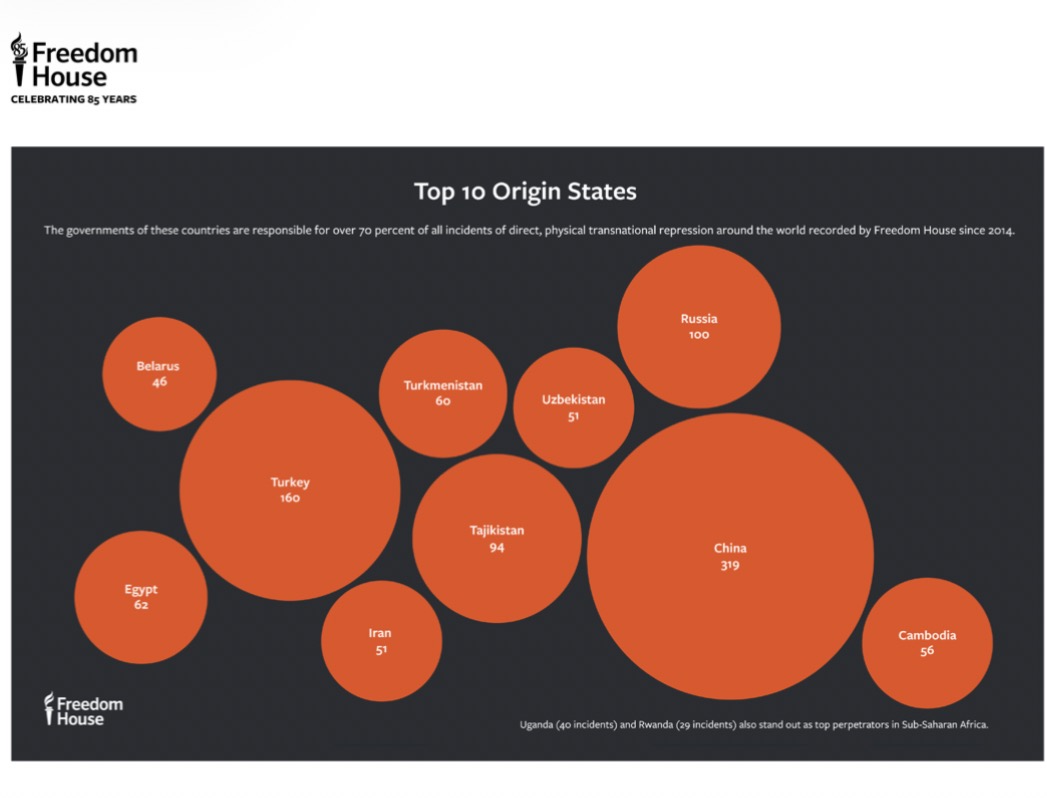
The report documents 126 new incidents of transnational repression in 2025, bringing the total number of recorded cases since 2014 to 1,375 incidents carried out by 54 countries—more than a quarter of UN member states. It highlights an alarming increase in cross‑border collaboration between authoritarian governments, particularly in Southeast Asia and East Africa, and the growing role of host states in enabling or failing to prevent abuse.
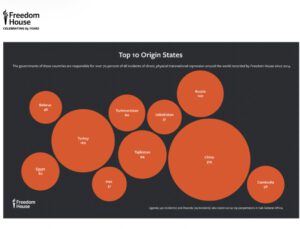
The report identifies the People’s Republic of China as the world’s most prolific perpetrator of transnational repression, based on the number of documented cases. According to Freedom House, the other top origin states include Turkey, Russia, Tajikistan, Egypt, Turkmenistan, Cambodia, Uzbekistan, Iran, and Belarus.
Key findings of the report include:
- Detention, deportation, and forced returns as the most frequently used tools against dissidents in exile;
- Cross‑border security cooperation between authoritarian regimes to target activists, journalists, and minority groups;
- Abuse of INTERPOL mechanisms, including Red Notices and diffusions, for politically motivated purposes;
- Kidnappings, physical assaults, and assassination attempts committed outside the country of origin;
- Misuse of asylum, immigration, and extradition systems in democratic states, exposing individuals to grave risk upon return.
The report underscores the profound impact of transnational repression on targeted individuals, including chronic fear, psychosocial harm, loss of livelihoods, restricted mobility, prolonged isolation, and the erosion of any sense of safety in exile.
While acknowledging recent steps taken by democratic governments and multilateral bodies—such as G7 statements, European Parliament resolutions, and the UN Office of the High Commissioner for Human Rights’ first Civic Space Brief on transnational repression—Freedom House warns that significant protection gaps remain. Existing responses are often inconsistent, under‑resourced, or focused on rhetoric rather than enforcement.
Freedom House calls on states to:
- Adopt a clear and comprehensive governmental definition of transnational repression;
- Impose targeted sanctions and visa bans on officials and institutions involved in forced returns and cross‑border abuses;
- Strengthen oversight and accountability mechanisms within INTERPOL to prevent political misuse;
- Develop specialised protection and support services for individuals and communities at risk;
- Ensure that asylum, migration, and security policies do not enable transnational repression.
This report is a vital resource for policymakers, civil society organisations, journalists, and researchers working to defend freedom of expression, protect human rights defenders in exile, and counter the expanding global threat of transnational repression.
Read the full Freedom House report here: https://freedomhouse.org/report/special-report/2026/collaboration-and-resistance-tracking-transnational-repression-2025