UN Working Group on Arbitrary Detention Highlights Growing Threat of Transnational Repression
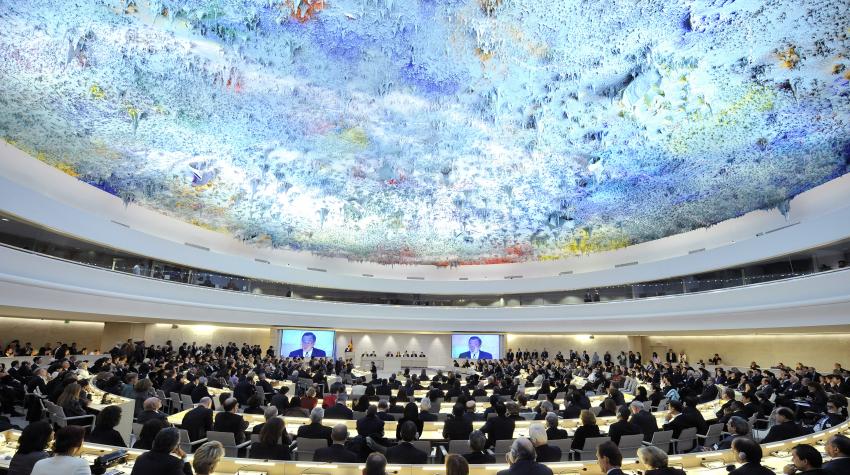
The Working Group on Arbitrary Detention has published its annual report to the Human Rights Council, dedicating a thematic section to the growing relationship between arbitrary detention and transnational repression (TNR). The report provides one of the most comprehensive analyses to date of how authoritarian governments use cross-border tactics to silence journalists, human rights defenders, political dissidents, and exiled activists beyond their borders.
According to the report, transnational repression consists of acts conducted or directed by a State, or its proxies, to deter, silence, intimidate, or punish criticism and human rights advocacy taking place outside its territory. The Working Group highlights that such practices frequently lead to arbitrary detention and serious violations of due process guarantees.
The report identifies three principal forms of transnational repression:
- Physical repression, including cross-border abductions, extraordinary renditions, forced returns, and extraterritorial killings carried out with or without the cooperation of host-state authorities;
- Legal repression, including politically motivated criminal prosecutions, trials in absentia, abusive extradition requests, misuse of INTERPOL mechanisms, arbitrary deprivation of nationality, and the criminalization of peaceful activities conducted abroad;
- Digital repression, including spyware attacks, hacking, online harassment, surveillance, digital threats, and technology-enabled intimidation targeting exiled activists, journalists, and their relatives.
Key findings of the report include:
- Transnational repression increasingly relies on legal and administrative mechanisms that appear lawful while undermining fundamental rights and due process;
- Criminal prosecutions in absentia and politically motivated extradition requests are frequently used against exiled dissidents and human rights defenders;
- Misuse of INTERPOL Red Notices and international judicial cooperation mechanisms continues to expose exiled individuals to serious risks of arbitrary detention and persecution;
- Digital surveillance and spyware have become central tools of authoritarian governments seeking to monitor, intimidate, and silence critics abroad;
- Family members and associates remaining in the country of origin are often subjected to retaliation and collective punishment as a means of exerting pressure on exiled activists;
- Host states can also bear responsibility when they facilitate unlawful transfers, fail to conduct adequate human rights assessments, or neglect their obligations under the principle of non-refoulement.
The report emphasizes that extradition, deportation, and international criminal cooperation should never be used when there are substantial grounds to believe that proceedings are politically motivated, discriminatory, or incompatible with international fair trial standards. It further stresses that prosecutions in absentia, deprivation of nationality, and the criminalization of peaceful activities carried out abroad cannot lawfully justify deprivation of liberty.
Notably, the report’s findings closely align with the work and advocacy of the Coalition Against Transnational Repression in Germany, which has repeatedly highlighted the risks posed by abusive legal cooperation, misuse of extradition procedures, digital attacks, and the targeting of exiled communities. Both analyses underscore the urgent need for stronger safeguards, victim-centred protection mechanisms, and greater accountability for states engaging in transnational repression.
The Working Group recommends that host states:
- Prevent and investigate acts of transnational repression committed within their territory;
- Refuse extradition, deportation, or transfer requests that do not meet international human rights standards;
- Fully uphold the principle of non-refoulement where individuals face risks of persecution, arbitrary detention, torture, enforced disappearance, or other serious violations;
- Ensure robust judicial oversight, transparency, and procedural safeguards in all forms of international criminal cooperation;
- Strengthen scrutiny of INTERPOL Red Notices and other cross-border law enforcement mechanisms vulnerable to abuse;
- Improve protection for individuals targeted by digital, legal, and physical forms of transnational repression.
The report provides important international recognition that transnational repression is not limited to physical attacks, but includes legal harassment, abusive extradition requests, digital surveillance, and reprisals against family members, concerns that have been consistently documented by exiled communities and civil society organisations in Germany, including the Coalition Against Transnational Repression in Germany.