Reporters Without Borders Report on Transnational Repression in Germany
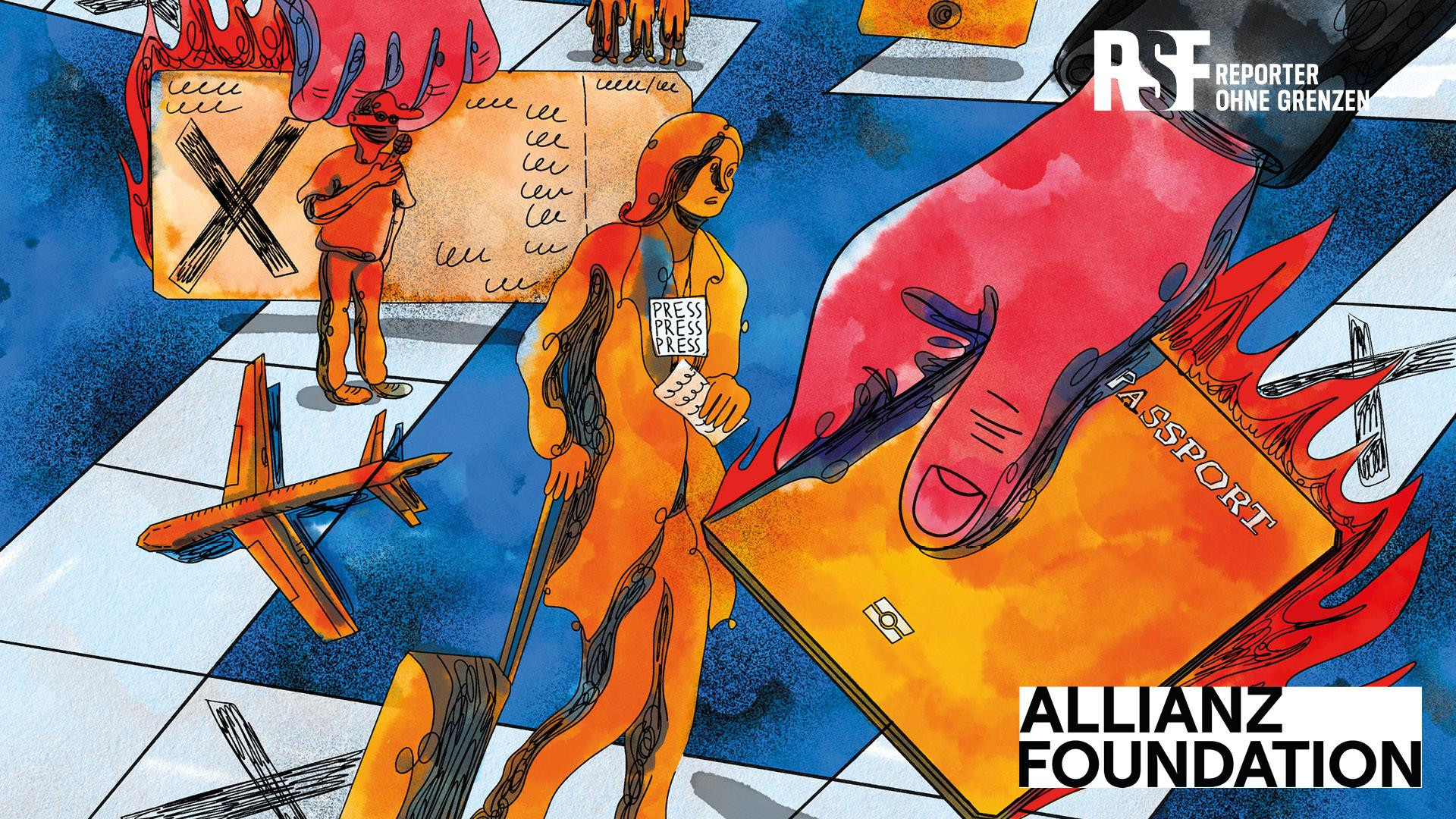
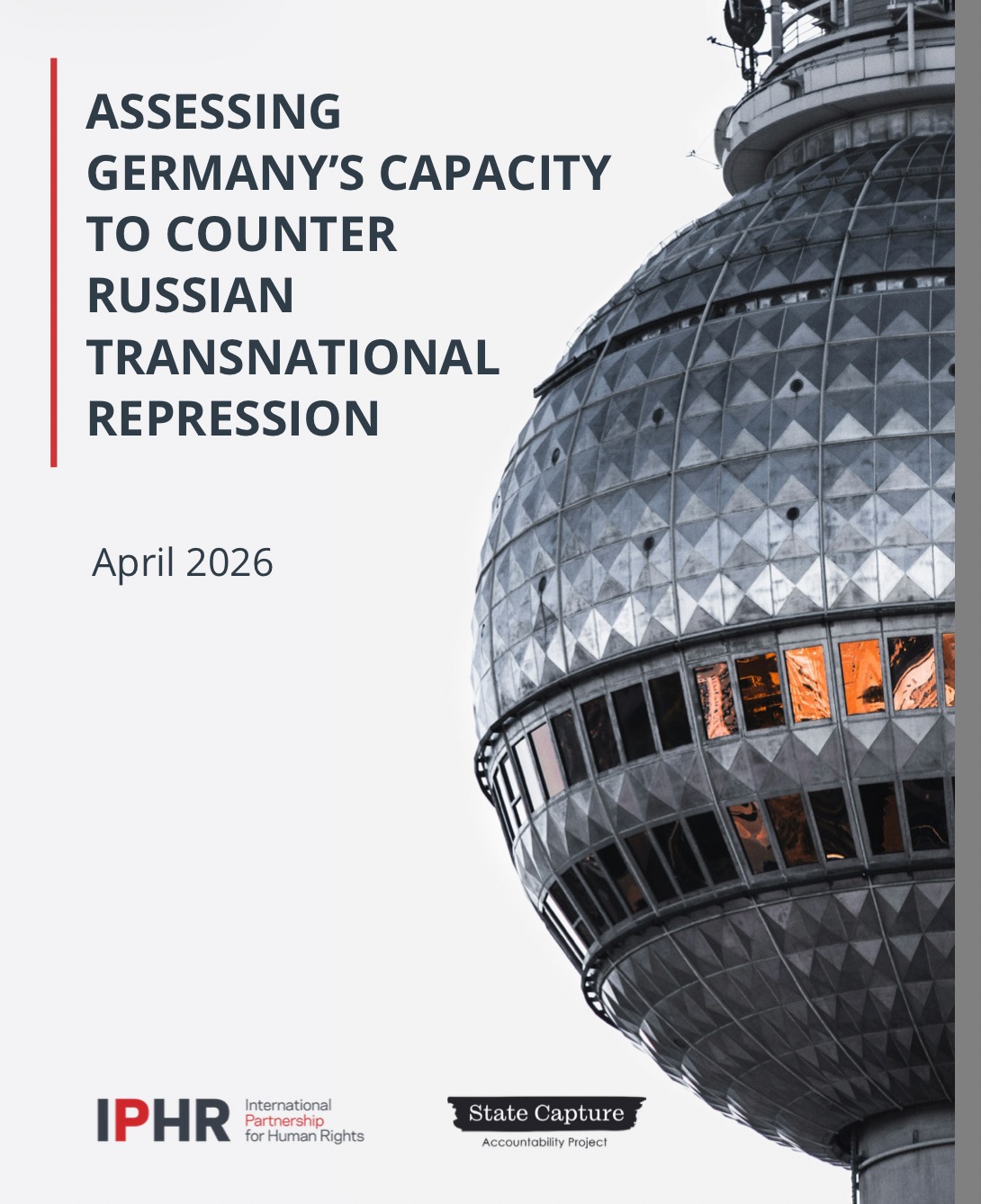
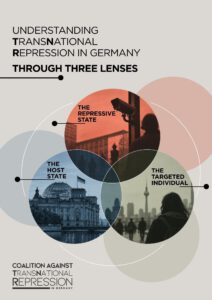
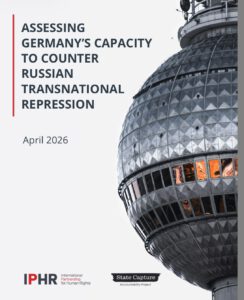
Reporters Without Borders (RSF) Germany—a founding member of the Coalition Against Transnational Repression in Germany—has published a comprehensive report detailing transnational repression against Russian media professionals residing in Germany. Both RSF and the TNR Coalition emphasize that transnational repression (TNR) can only be effectively combated by exposing its underlying structures, strategies, and key actors.
The report analyzes the institutional resources, repressive methods, and actors deployed by the Russian state. It addresses specific demands to the German government, given that Germany serves as one of the primary host countries for Russian journalists in exile, inherently making it a target for Russian state aggression.
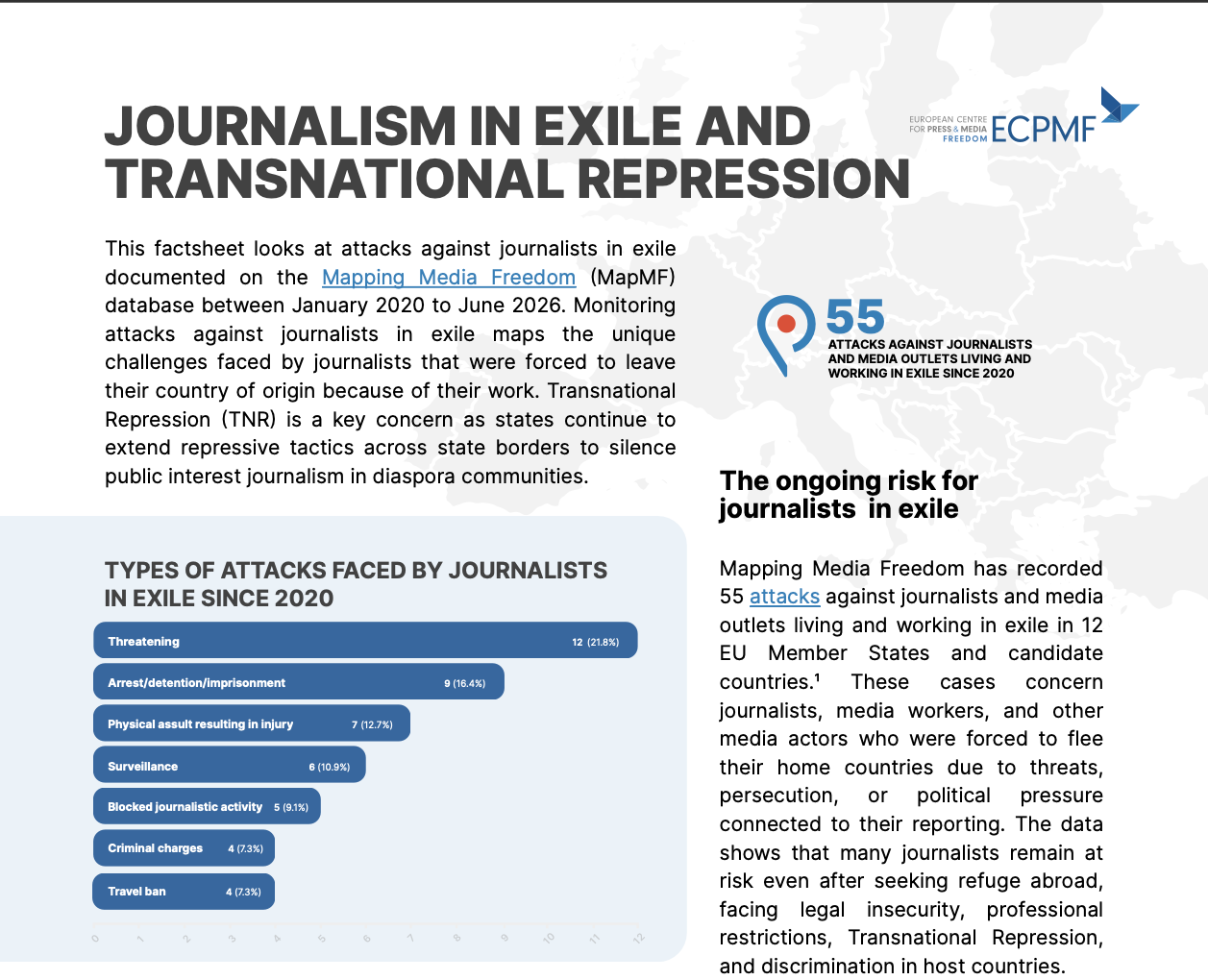
Poisonings, cyberattacks, and home raids targeting relatives—Russian journalists face persistent persecution by their authoritarian home state, even from exile. Yet, these exiled media professionals play a vital role in an informed host society, actively defending the universal right to reliable information.
“Journalists in exile contribute to an informed society in Germany and defend the right of us all to reliable information. Nevertheless, they are not safe here,” says RSF Executive Director Christian Mihr. “The sooner the German government confronts the threat posed by transnational repression and takes preventive action, the more effective the protection will be—not only for individual media professionals in exile, but also for our freedom of the press in Germany.”
What is Transnational Repression?
Transnational repression describes state-sponsored measures utilized by authoritarian regimes and their proxies to persecute exiles and diaspora critics across international borders. The primary goal of perpetrating states is to silence critical voices. Journalists are principal targets because silencing them directly impacts global freedom of information.
Recent events highlight the severity of these threats within Germany:
- Targeted Violence: The German Public Prosecutor’s Office is investigating a suspected poison attack against a Berlin-based Russian reporter.
- Intimidation of Relatives: Russian security authorities raided the home of an exiled Deutsche Welle journalist’s mother in Russia during the early hours of the morning.
- Infiltration Risks: A conference of Russian journalists in Germany was forced to hire private security due to past infiltration attempts.
Russia as a Perpetrator State
Russia represents a prominent perpetrator state that invests substantial resources into transnational repression. The regime maintains a dense network of specialized institutions and actors—spanning secret services, law enforcement, and targeted legal and financial instruments.
To pressure media professionals abroad, the regime combines multiple tactics:
- Physical violence and covert operations
- Digital surveillance and cyber threats
- Pressure applied to family members remaining in Russia
- In absentia criminal prosecutions and the freezing/seizure of financial assets
This strategic shift toward covert, digital, and bureaucratic methods makes repression less immediately visible, yet far more persistent and effective—posing a direct threat to press freedom within host nations.
Germany as a TNR Destination Country
Since Russia’s full-scale invasion of Ukraine in February 2022, independent journalism within Russia has become virtually impossible. Many media professionals sought refuge in Germany to continue their work; RSF alone assisted approximately 250 media professionals and their families in relocating between 2022 and 2025.
From exile, these journalists provide independent news to Russian society while delivering critical value to the German public. As experts on their authoritarian home country, they actively expose disinformation campaigns and hybrid Russian threats targeting democratic institutions. Because Germany hosts such a large cohort of Russian media professionals, the country has become a focal point for Russian repression, creating both a human rights and a national security challenge.
Why Germany Must Act
Combating transnational repression is not merely about protecting individual journalists; it is essential to safeguarding broader press freedom and securing access to reliable information regarding Russia, the war in Ukraine, and its impact on Europe.
RSF calls on the German government to take concrete steps:
- Financial & Institutional Support: Expand funding and structural resources for exile media operating within Germany.
- Civil Society Contact Centre: Establish a dedicated reporting and advice center. Affected journalists rarely seek help currently due to a lack of clear contact points and high bureaucratic hurdles.
- Diplomatic Action: Consistently utilize foreign policy instruments—such as targeted sanctions, expulsions, and entry bans—against perpetrators of repressive acts.
The report urges federal authorities, law enforcement agencies, and the Bundestag to act swiftly. Protecting exiled journalists is a national responsibility that requires immediate action alongside a coordinated European strategy.
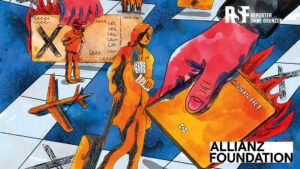
This project was funded by the Allianz Foundation.
Read the full report in German here: Reporter Ohne Grenzen